Art from Picasso, Henri Matisse to Tanja Playner, Nada Kelemen, Rebeccah Klodt in the
MOCAMAG Museum exhibition.
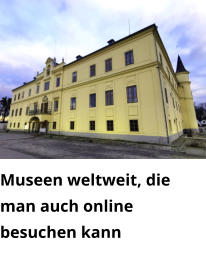
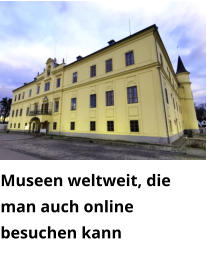
The MOCAMAG Contemporary Art Museum in Persenbeug is showcasing four exhibitions.
The MOCAMAG Museum presents four exhibitions until October 7, 2025. Visitors can expect
a journey through contemporary art visions with works by Arnulf Rainer, Tanja Playner,
Salvador Dali, Rodrigo Opazo from Chile, Sara McKenzie, and Alex Klas from the USA. For
Sara McKenzie as an abstract painter based in the vibrant and spiritually resonant city of
Santa Fe, New Mexico, her work is deeply infused with the exploration of our internal
journeys—emotional, spiritual, and subconscious. Motion is a key element in the work by
Sara McKenzie, capturing the dynamic and ever-evolving nature of our spiritual and
emotional states. Artist Alex Klas softens the boundaries of some objects, such as fruit in
his still lifes. He combines the romantic touch of painting in his works, which is reminiscent
of Paul Cézanne, Renoir and the Impressionists, but also approaches abstract painting.
Magazine about art and art market
MOCAMAG Museum
The exhibition continues with the “In the Footsteps of Nature” section, featuring art by
Austrian artist Tanja Playner, Rebeccah Klodt from the USA, Nada Kelemen from the Czech
Republic, Gerhard Richter, Henri Matisse, and Francoise Gilot, Picasso’s partner who had
the courage to leave Picasso. Nature is always unique and has many meanings for artists.
For some, it is creation, for others a refuge, but it is always fascinating to experience the
view of nature and its changes, and with these changes, the artist's world, in their works.
The exhibition "On the Trail of Nature" features the artwork of Tanja Playner, for whom
Lower Austria served as a source of inspiration. Matisse incorporated his own view of
nature into his works, depicting it in a simplified form. For some artists, the human being
merges with nature, as in the works of Duhita Thimaiah and Francoise Gilot. Artworks by
US artist Rebeccah Klodt are touching with the depth of the changing colors and textures
through the layers of paint. She demonstrates multifaceted sensibility in her works and
allows the viewer the freedom to perceive the artwork through untitled pieces. Artist Nada
Kelemen draws inspiration from nature and her travels and believes that a work of art can
be more than just a visual experience—it can be a spiritual message, a record of the inner
landscape, a tool for meditation, and a path to deep self-exploration.
MOCAMAG Museum is also presenting the exhibition "Abstract Imagination" until the end
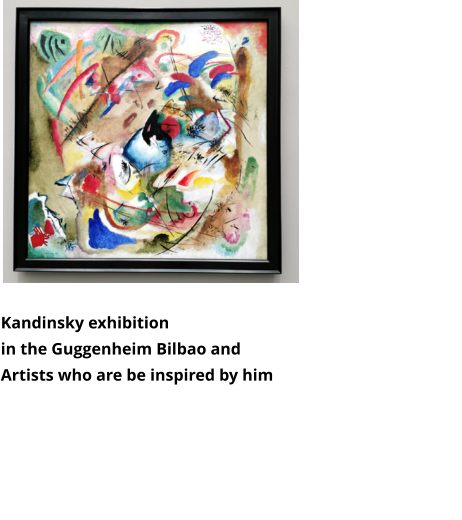
of September 2025. Artists such as Claude Monet, Wassily Kandinsky, but also Pablo
Picasso and other 20th-century artists laid the foundation for the development of abstract
art. Many artists consider nature and mood as the basis of their artworks. Geometric
shapes and technical details also frequently appear in such works. With his objects, Jean
Tinguely showed the world that one could create works of art and objects from old objects.
His drawings, which often appear abstract, also contain elements from sketches and
planned objects.
You might also be interested in:
Artist Nada Kelemen and Museum‘s Director
Heinz Playner
Photocredit: Tanja Playner
Madeleine Schachter demonstrate experimental power in their artworks. These artists
combine nature, music, and poetry.
“The imagination that artists convey onto canvas through colors, textures, strokes, and the
combination of certain techniques is fascinating, and it is always exciting to see the world
and the artists' perceptions reflected in the images they share with the world“ – says Heinz
Playner, director oft he MOCAMAG Museum.
The exhibition then moves on to the section "The Body and Its Facets." The representation
of the body in art has undergone major changes throughout art history. The 20th and 21st
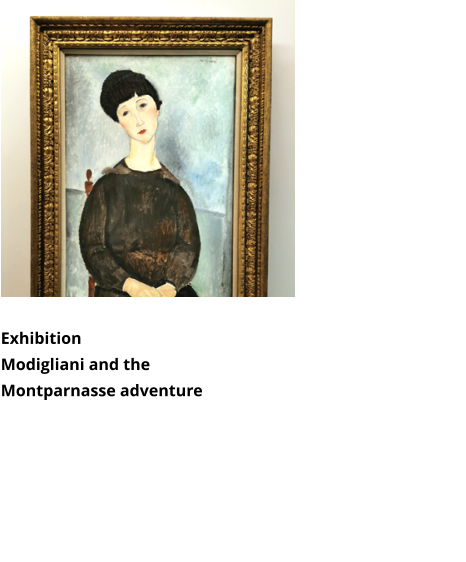
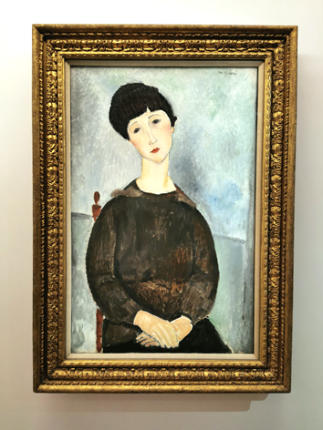
centuries brought about particularly significant changes in art. With the works of Cézanne,
Renoir, Modigliani, and especially Picasso, artists showed the world that more than just
classical representations of the body were possible. While Gustav Klimt, responsive to the
changes in the art world and pictorial representation, emphasized the elegance of the body
and maintained a tendency toward classical representation, artists such as Salvador Dali,
Marc Chagall, Henri Matisse, and Pablo Picasso developed their own directions and their
own artistic language. There were no limits to the imagination. Gerhard Richter also
experimented with the depiction of people, interpreting the blurred nature of painting in
his own way. Georg Baselitz turned paintings upside down, changing our view of the art
world. The artist Tanja Playner experiments with the body by placing its parts perpendicular
to each other and to objects. In her artwork, she plays with the body like puzzle pieces,
exploring her very own way of perceiving body and life. Even today, there are artists like
Duhita Thimaiah who are enthusiastic about classical painting techniques and
representation.
Artists of the 20th and 21st centuries show that the body is still a field of research that is
deeply connected to the inner world.
Kunst von Picasso und Henri Matisse bis hin zu Tanja Playner, Nada Kelemen und Rebeccah
Klodt in der MOCAMAG Museumsausstellung.
Das MOCAMAG Museum für zeitgenössische Kunst in Persenbeug präsentiert vier
Ausstellungen. Bis zum 7. Oktober 2025 können Besucher eine Reise durch die Visionen
zeitgenössischer Kunst mit Werken von Arnulf Rainer, Tanja Playner, Salvador Dalí, Rodrigo
Opazo aus Chile, Sara McKenzie und Alex Klas aus den USA erleben. Sara McKenzie, eine
abstrakte Malerin aus der pulsierenden und spirituell bedeutsamen Stadt Santa Fe, New
Mexico, erforscht in ihren Werken unsere inneren Reisen – emotional, spirituell und
unbewusst. Bewegung ist ein Schlüsselelement in ihren Arbeiten und fängt die dynamische
und sich ständig wandelnde Natur unserer spirituellen und emotionalen Zustände ein. Der
Künstler Alex Klas verwischt die Konturen mancher Objekte, wie beispielsweise Früchte in
seinen Stillleben. In seinen Werken verbindet er die romantische Note der Malerei, die an
Paul Cézanne, Renoir und die Impressionisten erinnert, mit Annäherungen an die abstrakte
Malerei.
Die Ausstellung wird mit dem Abschnitt „Auf den Spuren der Natur“ fortgesetzt, der Werke
der österreichischen Künstlerin Tanja Playner, der US-Amerikanerin Rebeccah Klodt, der
Tschechin Nada Kelemen, von Gerhard Richter, Henri Matisse und Françoise Gilot, Picassos
Lebensgefährtin, die den Mut hatte, ihn zu verlassen, präsentiert. Die Natur ist stets
einzigartig und birgt für Künstler vielfältige Bedeutungen. Für manche ist sie Schöpfung, für
andere Zuflucht, doch es ist immer faszinierend, die Natur und ihre Veränderungen und
damit die Welt des Künstlers in seinen Werken zu erleben. Die Ausstellung „Auf den Spuren
der Natur“ zeigt die Arbeiten von Tanja Playner, für die Niederösterreich eine Quelle der
Inspiration war. Matisse verarbeitete seine eigene Sicht auf die Natur in seinen Werken und
stellte sie in vereinfachter Form dar. Für einige Künstler verschmilzt der Mensch mit der
Natur, wie in den Werken von Duhita Thimaiah und Françoise Gilot. Die Kunstwerke der
US-amerikanischen Künstlerin Rebeccah Klodt berühren durch die Tiefe der wechselnden
Farben und Texturen, die durch die Farbschichten entstehen. In ihren Werken beweist sie
vielseitige Sensibilität und lässt dem Betrachter durch unbetitelte Arbeiten die Freiheit, das
Kunstwerk individuell zu interpretieren. Die Künstlerin Nada Kelemen lässt sich von der
Natur und ihren Reisen inspirieren und ist überzeugt, dass ein Kunstwerk mehr als nur ein
visuelles Erlebnis sein kann – es kann eine spirituelle Botschaft, ein Spiegel der inneren
Welt, ein Werkzeug zur Meditation und ein Weg zur tiefen Selbsterforschung sein.
Das MOCAMAG Museum präsentiert außerdem bis Ende September 2025 die Ausstellung
„Abstrakte Imagination“. Künstler wie Claude Monet, Wassily Kandinsky, aber auch Pablo
Picasso und andere Künstler des 20. Jahrhunderts legten den Grundstein für die
Entwicklung der abstrakten Kunst. Viele Künstler betrachten Natur und Stimmung als
Grundlage ihrer Werke. Geometrische Formen und technische Details tauchen in solchen
Arbeiten ebenfalls häufig auf. Mit seinen Objekten zeigte Jean Tinguely der Welt, dass man
aus alten Gegenständen Kunstwerke und Objekte schaffen kann. Seine Zeichnungen, die
oft abstrakt wirken, enthalten auch Elemente aus Skizzen und geplanten Objekten.
Madeleine Schachter demonstrieren in ihren Kunstwerken experimentelle Kraft. Diese
Künstler verbinden Natur, Musik und Poesie.
„Die Vorstellungskraft, die Künstler durch Farben, Texturen, Pinselstriche und die
Kombination bestimmter Techniken auf die Leinwand bringen, ist faszinierend, und es ist
immer wieder spannend zu sehen, wie sich die Welt und die Wahrnehmungen der Künstler
in den Bildern widerspiegeln, die sie mit der Welt teilen“, sagt Heinz Playner, Direktor des
MOCAMAG.
Die Ausstellung wendet sich anschließend dem Abschnitt „Der Körper und seine Facetten“
zu. Die Darstellung des Körpers in der Kunst hat im Laufe der Kunstgeschichte tiefgreifende
Veränderungen erfahren. Das 20. und 21. Jahrhundert brachten besonders bedeutende
Umbrüche mit sich. Mit den Werken von Cézanne, Renoir, Modigliani und insbesondere
Picasso zeigten Künstler der Welt, dass mehr als nur klassische Darstellungen des Körpers
möglich sind. Während Gustav Klimt, der auf die Veränderungen in der Kunstwelt und der
Bildsprache reagierte, die Eleganz des Körpers betonte und eine Tendenz zur klassischen
Darstellung beibehielt, entwickelten Künstler wie Salvador Dalí, Marc Chagall, Henri Matisse
und Pablo Picasso ihre eigenen Wege und ihre eigene künstlerische Sprache. Der Fantasie
waren keine Grenzen gesetzt. Auch Gerhard Richter experimentierte mit der Darstellung
von Menschen und interpretierte die verschwommene Natur der Malerei auf seine Weise.
Georg Baselitz stellte Gemälde auf den Kopf und veränderte so unsere Sicht auf die
Kunstwelt. Die Künstlerin Tanja Playner experimentiert mit dem Körper, indem sie seine
Teile senkrecht zueinander und zu Objekten anordnet. In ihren Werken spielt sie mit dem
Körper wie mit Puzzleteilen und erforscht ihre ganz eigene Wahrnehmung von Körper und
Leben. Auch heute noch gibt es Künstlerinnen wie Duhita Thimaiah, die sich für klassische
Maltechniken und Darstellungsformen begeistern.
Künstlerinnen des 20. und 21. Jahrhunderts zeigen, dass der Körper nach wie vor ein
Forschungsfeld ist, das eng mit der inneren Welt verbunden ist.

Auch Alois Schroll, Mitglied des
Nationalrats, des Bundesrats und des
Europäischen Parlaments sowie Mitglied
des Kulturausschusses des
österreichischen Parlaments, hat die
Ausstellung im MOCAMAG Museum im
September 2025 besucht.
„Als Mitglied des Kulturausschusses des
österreichischen Parlaments möchte ich
Tanja Playner und Heinz Playner für die
Einladung danken und dafür, dass sie diese
hochkarätige Kunst und Kultur einem
breiten Publikum zugänglich gemacht
haben!“, sagte Alois Schroll.
Alois Schroll, a member of the National
Council, the Federal Council, and the
European Parliament, as well as a member
of the Cultural Affairs Committee of the
Austrian Parliament, also visited the
exhibition at the MOCAMAG Museum in
September 2025.
"As a member of the Cultural Affairs
Committee of the Austrian Parliament, I
would like to thank Tanja Playner and
Heinz Playner for the invitation and for
making this high-caliber art and culture
accessible to a wider audience!" said Alois
Schroll.
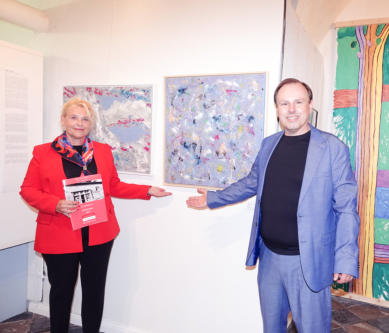
Heinz Playner shows art by Sara McKenzie
Photocredit: Tanja Playner

Artist Tanja Playner in MOCAMAG
Museum
with her artwork „The bathing and pink
clouds in the water“, 2025, 160 x 250 cm
Photocredit: Tanja Playner
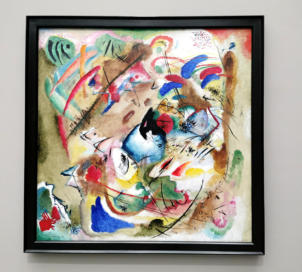
Director of the MOCAMAG Museum
Heinz Playner shows art by Alex Klas in the
exhibition in Museum
Photocredit: Tanja Playner